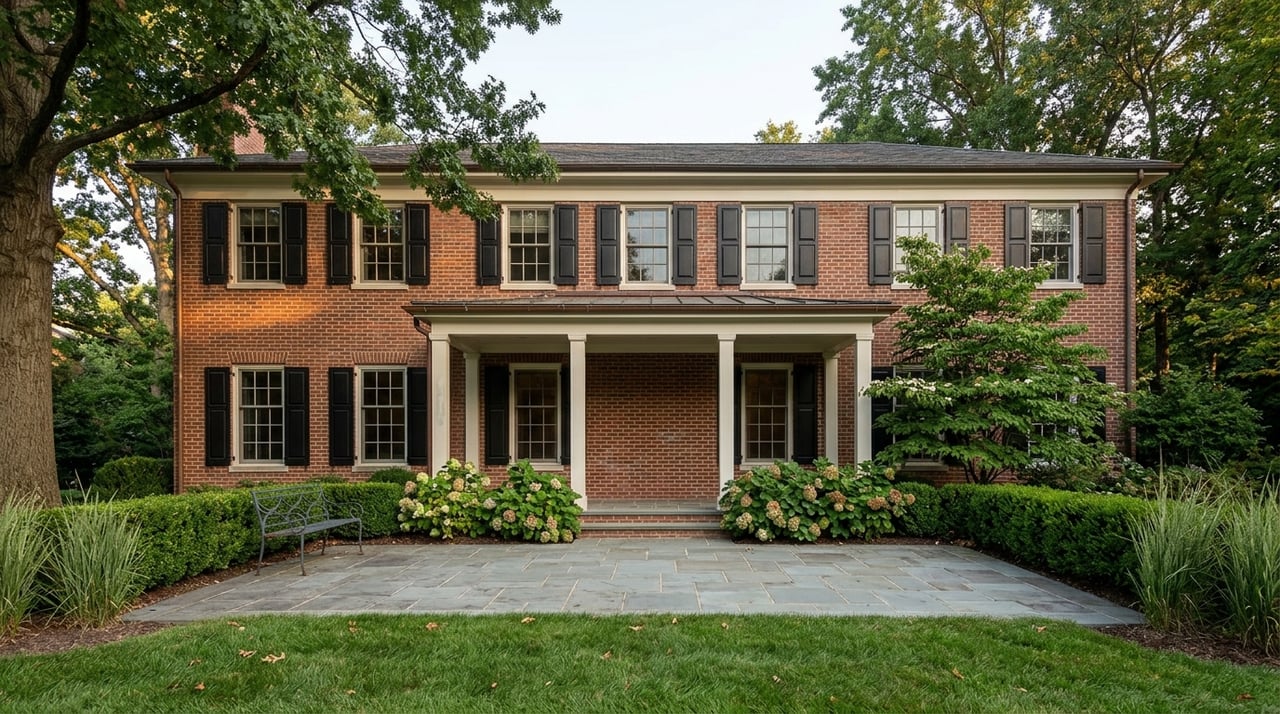
Bethesda's Median Home Price Is Two Markets Wearing One Number
August 27, 2026
August 27, 2026
If you tried to catch the Red Line through Bethesda this month, you already know something the median price won't tell you. Since July 6, Metro has closed three stations, Grosvenor-Strathmore, Medical Center, and Bethesda itself, with no trains running between North Bethesda and Friendship Heights through September 6. Riders are on free shuttle buses, some running in dedicated lanes along Rockville Pike and Wisconsin Avenue. If you're touring homes in downtown Bethesda right now, this is the backdrop.
That shutdown isn't random maintenance. Crews are building the physical connection between the new Purple Line and the existing Metro station, and it's reportedly the last major piece of construction on a light rail project that's roughly 90 percent complete as of early August, according to Bethesda Beacon's reporting. The line itself is expected to carry passengers in late 2027 or early 2028. A few miles away, work on Chevy Chase Lake Drive tied to the same project is scheduled to wrap by the end of this summer. In other words, the disruption you're experiencing this week is the finish line, not a detour.
That timing matters more than it looks like it should, because it's happening at the exact moment Bethesda's headline home price stopped making sense on its own.
Over the three months ending in May 2026, the median sale price of a home in Bethesda was $1.3 million, up 3.1 percent from the same period a year earlier. In the same stretch, the median sale price per square foot was $479, down 1.8 percent year over year. Read those two numbers side by side and you get a contradiction: the typical home cost more, while the typical square foot cost less.
That's not a data error. It's a mix shift. When the overall price climbs while the price per foot falls, it usually means buyers are closing on bigger homes relative to what sold a year ago, not that value is eroding across the board. A different data set built on Bright MLS records put Bethesda's median at $1,222,500 for a separate window this year, up a much smaller 0.22 percent. Neither number is wrong. They're measuring slightly different slices of the same market at different moments, which is exactly the problem with quoting any single "Bethesda median price" as if it describes one thing.
It doesn't. It describes two things sold under one address.
Bethesda's housing stock splits cleanly into condos and single-family homes, and the gap between them isn't small. Condos have averaged around $372,500, while single-family homes have averaged closer to $1.4 million, occasionally pushed above $1.46 million depending on the month. That's nearly a fourfold spread sitting inside one city's "median."
On a price-per-square-foot basis, single-family homes still cost more than condos, by roughly $33 a foot on average. But recent listing data shows something that runs against the usual assumption that the cheaper segment is where deals live: list price per square foot on condos has been climbing faster than on single-family homes, by a wide enough margin that it's worth watching rather than dismissing. If that holds up in closed sales over the next few quarters, the "affordable" entry point into Bethesda may not stay affordable at the same rate the detached-home segment does.
| Segment | Typical price | Recent price-per-square-foot signal |
|---|---|---|
| Condos | around $372,500 average | listed price per square foot rising faster than single-family homes in recent listing data |
| Single-family homes | often $1.4 million to $1.46 million average | listed price per square foot rising more slowly, though still commanding a premium over condos |
As of mid-2026, the broader market backs up the pace: roughly 236 homes available with about 2.7 months of supply, more than 42 percent of homes selling above asking, and a sale-to-list ratio sitting just above 100 percent. That's a market where a buyer's opening offer matters more than their negotiating room.
Zoom into specific neighborhoods and the split gets sharper still. In Edgemoor, one of Bethesda's most established addresses within walking distance of Bethesda Row, the median home price sat at $2.4 million as of January 2026, with an average sale price of $2,653,342. But the trailing twelve-month median there was $2,137,500, down 11 percent from the year before it, even as homes moved in an average of 42 days against a 53-day national benchmark. That's a cooling top tier inside a market everyone assumes is only getting more expensive.
Buyers priced out of Edgemoor or nearby Bradley Hills tend to land in West Bethesda or Glen Echo Heights, where homes typically start closer to $900,000 to $1.3 million, though Glen Echo Heights also stretches up past $5 million on lots closer to the Potomac. Along the way, close-in blocks like Battery Park have seen builder teardowns reshape pricing entirely, where land value increasingly drives the number more than the structure sitting on it.
None of that shows up in a single "Bethesda median." It's five or six micro-markets, each with its own supply, its own buyer pool, and its own reason for the number it produces.
Here's where the transit disruption and the pricing split connect. The buyers most exposed to the current Metro shutdown, the ones touring condos in the Bethesda Row and Woodmont Triangle corridor, are also the ones sitting closest to the new Purple Line connection once it opens. Their inconvenience this summer is quite literally the amenity being built underneath their future commute. If the condo segment's price-per-square-foot momentum keeps climbing into next year, transit proximity is a reasonable explanation to watch.
Buyers in Edgemoor, Glen Echo Heights, or Bradley Hills already have an easy walk or short drive to the existing Metro and the Capital Crescent Trail, so the new line adds less marginal value to their daily routine. Their pricing story runs through land scarcity and lot economics instead, which is part of why a luxury pocket like Edgemoor can show an 11 percent pullback in its trailing median even while the city's overall single-family average holds firm.
If you're comparing Bethesda to another DMV suburb using one median number, you're really comparing an average of these very different bets. A more useful question is which side of that split matches what you're actually buying: a walkable unit near a transit connection still under construction, or a detached home where the land itself is doing most of the work.
Is the Bethesda Metro shutdown permanent? No. It's scheduled to run through September 6, 2026, with free shuttle buses covering the closed stations while crews finish the Purple Line connection at Bethesda station.
When does the Purple Line actually open? Current reporting points to late 2027 or early 2028, after a project timeline that has shifted several times since its original targets.
Does Bethesda's median home price tell me if the market is affordable? Not on its own. With condos averaging around $372,500 and single-family homes averaging closer to $1.4 million, the blended median hides which segment you're actually pricing against.
If you're weighing a move into Bethesda, or trying to figure out whether a condo near the new Purple Line connection or a detached home further out fits your plans, that's exactly the kind of local read a spreadsheet can't give you. Capitol Z Homes works this market block by block, and if you're on the selling side of that equation, get your free home valuation to see where your specific property sits inside the number everyone else is quoting.
Trust, Reliability and Knowledge. We are very passionate about the relationships we build and will always work relentlessly on your behalf to help you achieve your real estate goals.